
TEXAS EXPUNGEMENT ATTORNEY
Everyone Deserves..
A Second Chance
Erase your arrest record and unlock better jobs, housing, and peace of mind.
We file expunctions and nondisclosures in every Texas county.
Lost Opportunities?
Stop letting your record hold you back.
Can you deny being arrested on job & licensing applications after expunction / nondisclosure?
Both options can protect your future — but they work differently.
Bottom line: you can deny the arrest occurred.
- What you can say “No, I have not been arrested or charged.”
- Why it’s strongest The records are ordered destroyed / deleted.
- Common fit Dismissals, pretrial diversion programs, no-bills, acquittals, certain completed deferrals, and other qualifying outcomes.
Bottom line: for most job applications, you can generally deny the arrest, but some regulated jobs can still see it.
- What you can say You are not required to state you were arrested when applying for jobs, loans, universities, etc.
- Key exception (regulated licensing) Certain agencies/boards can still access sealed records — commonly through fingerprint-based state or FBI background checks. Think professions where you need a license: lawyer, doctor, nurse, stock broker, CPA, teacher, police, military, etc.





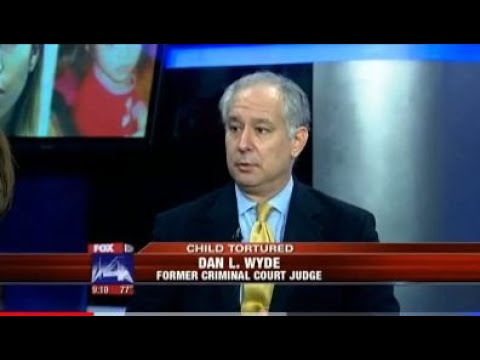


Learn About The Process 👇
🚨 Was Your Case Recently Dropped? 🚨
‼️ Watch this 👇 important video ‼️
Law Firm Letter
Can’t file yet. You appear eligible for an expunction and/or nondisclosure, but the waiting period has not ended. This letter helps you explain the status of your case while you wait.
Need something official for screening. You’re applying for a job, housing, school, immigration-related paperwork, or professional licensing—and you need a clear, professional explanation of your record status for decision-makers.
Have a nondisclosure but still get flagged. Some screenings (including certain fingerprint-based or agency checks) may still raise questions. A firm letter can reduce confusion and help you respond quickly and consistently.
For $500, you’ll receive a law-firm letter on letterhead that explains your case(s) in the best light.
It summarizes the disposition and next steps, and confirms no conviction when applicable.
Useful for employers, schools, licensing boards, lenders, landlords, and other decision-makers.
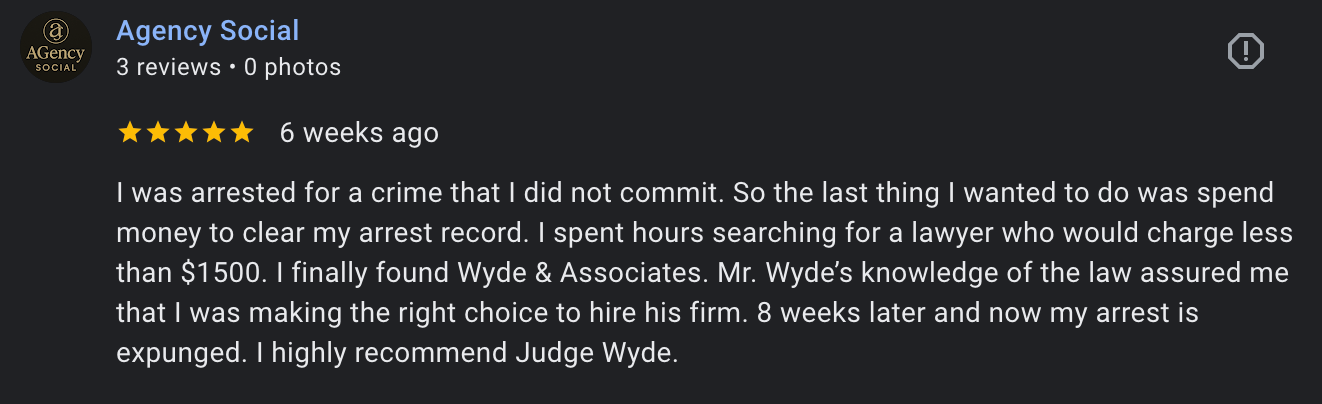
🌟 Our Reviews 🌟
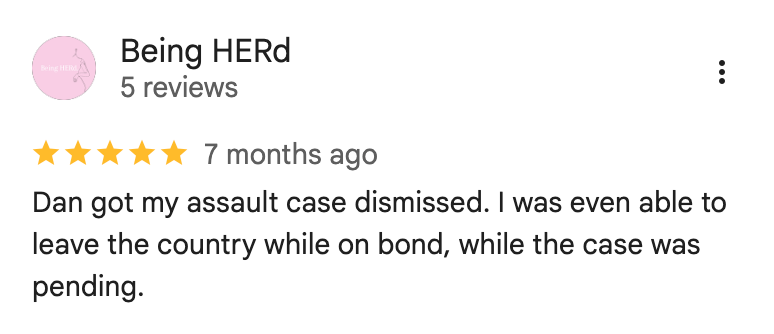


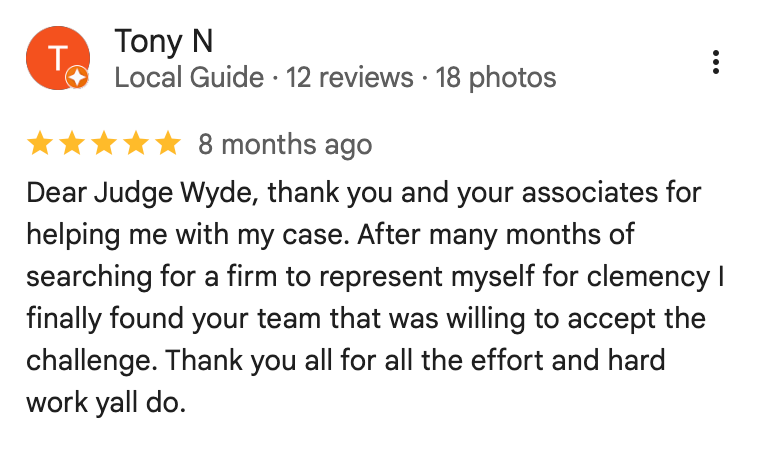

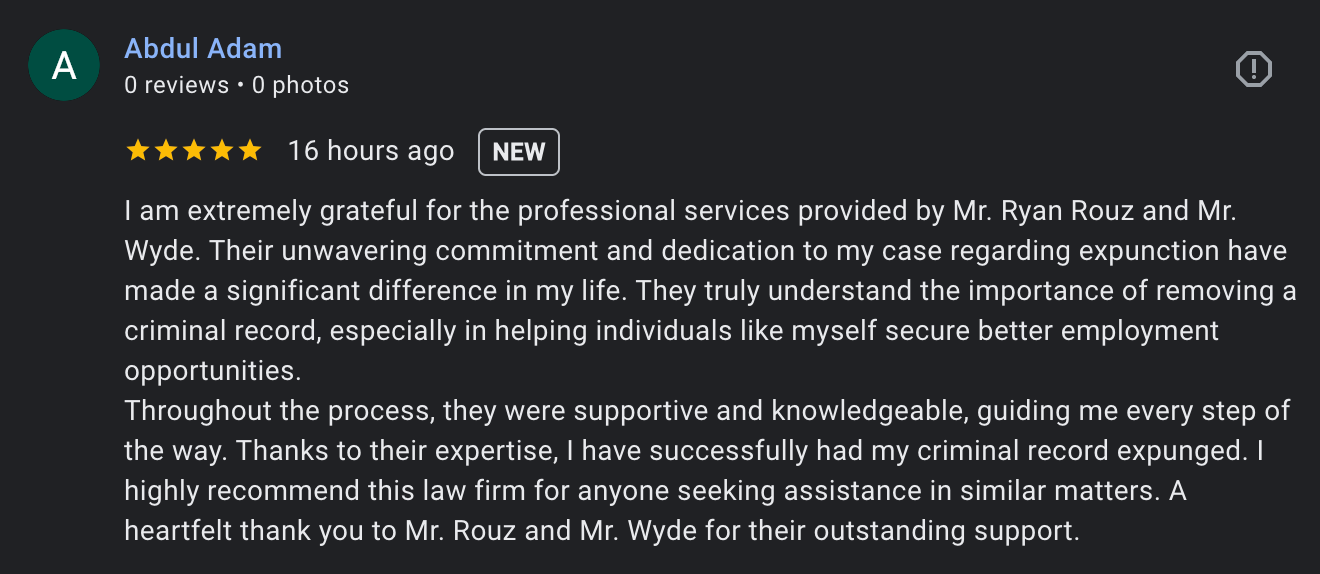
Record Clearing FAQ
Texas Expunctions and Nondisclosures
Below are quick, plain-English answers. Eligibility depends on your exact charge, disposition, and whether any other offense arose from the same arrest.
What Is An Expunction?
An expunction(expungement) is a court order that requires agencies to delete, destroy, or return records related to an arrest/case and to remove index references. The goal is to stop the arrest from showing up in background checks and court/agency record systems.
What expunction typically covers
- Arrest records, booking/jail records, court case jacket, prosecutor file, and agency indexes
- Records held by state depositories and many agencies listed in the court’s service list
- After the order is final, you may generally deny the arrest/case, with narrow exceptions
Statutes: Tex. Code Crim. Proc. arts. 55A.051–55A.054, 55A.351–55A.353.
What Is A Nondisclosure?
An Order of Nondisclosure “seals” your criminal history from most public background checks. The record is not destroyed; it is restricted from public view.
Who can still see a sealed record?
- Law enforcement and criminal justice agencies
- Certain state licensing boards and agencies (depending on the profession)
Why choose nondisclosure?
- Some cases are not eligible for expunction but may be eligible to be sealed
- It can meaningfully improve employment/housing outcomes even when expunction isn’t available
Statutes: Tex. Gov’t Code ch. 411, subch. E-1.
How Long Does The Process Take?
Many expunctions or nondisclosures take about 6–8 weeks from filing to a signed order, but timing varies by county and court.
What affects the timeline?
- How quickly the court gives a setting or reviews proposed orders
- Whether the prosecutor responds or objects
- Notice/service requirements and agency processing after the order is signed
Reference: Arts. 55A.351–55A.353 (agency duties after an order is signed).
Do I Qualify To Have My Dismissed Case Expunged?
Sometimes, yes —but a dismissal by itself doesn’t automatically guarantee expunction. Eligibility depends on why the case was dismissed and whether any statutory “bars” apply.
Common dismissal-based grounds (art. 55A.053(a)(2)(A)–(E))
- Completion of a pretrial intervention/diversion program
- Mistake of fact, false information, or other reason indicating absence of probable cause at the time of dismissal
- Charging instrument was void or other listed statutory grounds
- Released, not convicted, not pending, and no disqualifying community supervision (Class C is treated differently)
Common bars that can block expunction
- Still subject to prosecution for another offense arising from the same criminal episode
- Absconding after release on bond or certain warrant issues
Statutes: Arts. 55A.051, 55A.053(a)(2), 55A.151–55A.154.
What Is A Limited Expunction?
A limited expunction(sometimes called a “partial expunction”) is still an expunction order, but it includes a narrow retention carve-out. Practically: your record can be cleared from many public-facing places, while the prosecutor and/or law enforcement may be allowed to retain limited records for limited statutory purposes.
1 Why limited expunctions come up
They usually arise when the State argues it may still need certain records for a limited purpose, or takes the position that a limitations/waiting-period issue requires temporary retention by specific agencies.
2 What it clears vs. what may be retained
Usually cleared: many court/public index references and background-check entries (as ordered).
Possible retention: internal retention by prosecutor/law enforcement for a narrow, statute-limited purpose.
3 Why a hearing/affidavits are common
Limited expunctions more often require supporting evidence (affidavits, dismissal paperwork, reports/results) and are more likely to draw objections from the District Attorney—so a hearing is more common than in routine uncontested cases.
4 Why you may need a full expunction later
In many cases, the strategy is: (1) file now for the best relief available (sometimes limited), then (2) file again later after the limitations/waiting-period issue ends (or if the State later certifies it no longer needs the records) to request a full expunction without a retention carve-out.
Important: Whether limited relief is appropriate depends on the exact facts (charge, disposition language, same-transaction issues, and prosecutor position). We verify eligibility before filing.
Reference: Tex. Code Crim. Proc. art. 55A.302 (limited retention situations).
Can I Expunge My Arrest If Charges Were Never Filed?
Often, yes. If no charging instrument was presented, Texas law provides waiting-period pathways. The clock generally runs from the date of arrest.
No charging instrument filed — common waiting periods (art. 55A.052(a))
- Class C: 180 days(if no felony charge arose out of the same transaction)
- Class B/A: 1 year(if no felony charge arose out of the same transaction)
- Felony (or related felony): 3 years
- Possibly earlier if the prosecutor certifies the records are not needed for investigation/prosecution
Other routes
- Limitations-based route may apply in some cases (art. 55A.054)
Common bars
- A case is still pending from the arrest, or there is a disqualifying conviction from the same transaction
- Absconding after release on bond (art. 55A.154)
Statutes: Arts. 55A.052, 55A.054, 55A.154.
Can I Expunge My Class C Misdemeanor?
Many fine-only Class C cases can be expunged depending on the disposition (dismissal, deferred disposition, no complaint filed, acquittal, or pardon). These are often filed in the justice or municipal court that handled the citation.
Common Class C paths
- Deferred disposition → dismissal → expunction
- No complaint filed + 180 days since arrest (when applicable)
- Acquittal or pardon
Helpful documents to provide
- Citation number / cause number, arrest date, arresting agency
- Dismissal paperwork or municipal “case status” letter
Statutes: Arts. 55A.051, 55A.052, 55A.252.
Do I Qualify For An Automatic Nondisclosure?
Some first-offender misdemeanors can qualify for an automatic nondisclosure after successful deferred adjudication, but many offenses require a petition or are excluded.
General requirements (Gov’t Code § 411.072)
- Misdemeanor; deferred adjudication completed
- First offender (fine-only traffic is treated differently)
- At least 180 days from placement on deferred
Common exclusions
- DWI/BWI(covered under separate statutes)
- Offenses in certain Penal Code chapters or where the judge finds nondisclosure is not in the interest of justice
Statute: Tex. Gov’t Code § 411.072.
Can I Seal My DWI / BWI?
DWI/BWI sealing depends heavily on (1) whether the case was deferred or a conviction, and (2) disqualifiers such as accidents, BAC, CDL, and enhancements.
Deferred DWI/BWI — § 411.0726
- First offender; discharged/dismissed; typical 2-year wait
- No accident, no CDL/CLP, no BAC ≥ 0.15, no § 49.09 enhancement
DWI conviction + probation — § 411.0731
- First-offender Class B; all fines/costs paid
- Wait 2 years with qualifying interlock conditions, otherwise 5 years
DWI conviction without probation — § 411.0736
- Certain first-offender Class B after sentence completed
- Wait 3 years with interlock, otherwise 5 years
Statutes: §§ 411.0726, 411.0731, 411.0736; global disqualifiers § 411.074.
Can I Seal My Misdemeanor Conviction?
Many misdemeanor convictions can be sealed if you qualify and there are no global disqualifiers. The waiting period (if any) depends on the offense category and whether you received probation.
Conviction + community supervision — § 411.073
- Completed probation; fines/costs paid
- Immediate for many; 2-year wait for certain Penal Code chapters
Confinement (no probation) — § 411.0735
- Fine-only: immediate; otherwise commonly 2 years
Global disqualifiers — § 411.074
- Certain serious offenses and many offenses involving family violence
- New non-traffic convictions/deferred during probation or the waiting period
Statutes: §§ 411.073, 411.0735, 411.074.
Can I Seal My Case That Was Deferred?
Deferred adjudication cases are commonly eligible for nondisclosure after discharge/dismissal, but the waiting period depends on the offense type and whether the offense falls into restricted categories.
Misdemeanor deferred — § 411.0725
- Deferred adjudication → discharged/dismissed
- Immediate at discharge for many; 2 years for certain Penal Code chapters
- DWI/BWI uses § 411.0726
Felony deferred — § 411.0725(c)
- Typical 5-year wait after discharge for eligible cases
Statutes: §§ 411.0725, 411.0726, 411.074.
Background-Check Explanation Letter
- Attorney letter on firm letterhead explaining your case in the best light
- Clearly explains you were not convicted of the case (when true)
- Designed for employers, schools, apartments, and licensing situations
- Delivered as a professional PDF you can share as needed
- Free if you purchase an expunction or nondisclosure package below
Standard Expunctions & Nondisclosures
- Includes Background-Check Explanation Letter (normally $500)
- Record review + eligibility confirmation
- Drafting, filing, and coordinating service/notice
- Proposed order preparation and submission
- Typical timeline based on court docket and prosecutor response
Rush Expunctions & Nondisclosures
- Includes Background-Check Explanation Letter (normally $500)
- Priority drafting and filing (our team moves your case to the front of the line)
- Best effort to secure the earliest available court setting/order workflow
- Still subject to court schedule, notice rules, and prosecutor response time
- Ideal when a job/housing/licensing deadline is approaching
Limited Expunctions
- Includes Background-Check Explanation Letter (normally $500)
- Often requires additional evidence and tailored legal briefing
- More likely to face prosecutor objections
- Affidavits/supporting documents commonly needed
- Hearing is more commonly required
Pardons
- Case evaluation and strategy based on your record
- Application drafting and supporting documentation
- Guidance on reference letters and evidence package
- Timeline depends on the reviewing authorities
Scope note: Pricing assumes a typical single matter. Multiple arrests/cause numbers, multiple counties, or unusually contested proceedings may require an adjusted scope.
Free Record Clearing Eligibility Check
💵 $1,795 Normal Service 💵
⚡️ $2,500 Rush Service ⚡️
Payment Plan Available
We Are Proud Legal Partners of: